 USA
 UK
 Egypt
 South Africa
 UAE
 Pakistan
 Hungary
 Kenya
 Zimbabwe
 Belgium
How to Choose the Best Kids Sports Franchise: A Guide for First-Time Business Owners
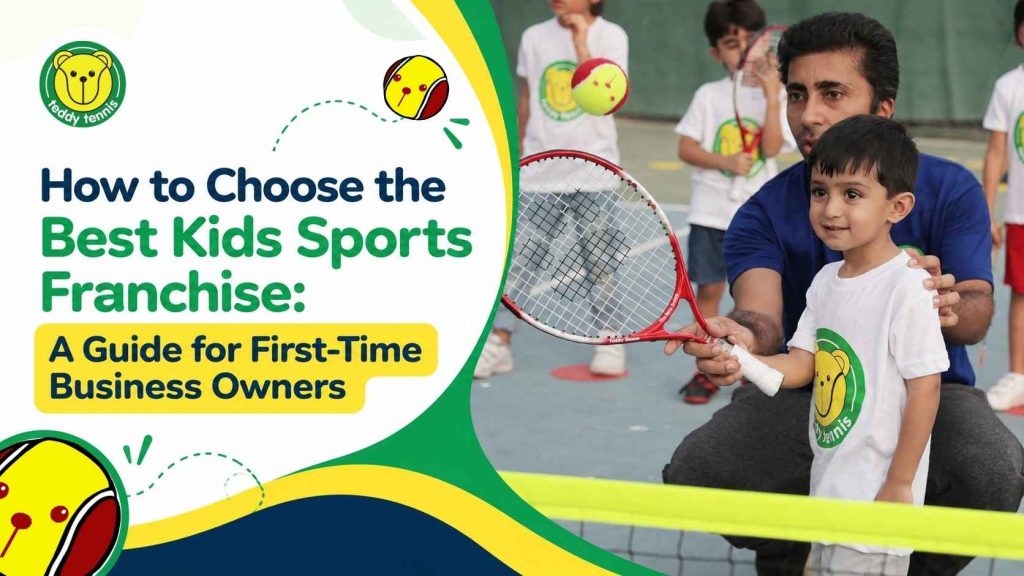
A practical look at the teaching program, business support, costs, and local demand—plus what makes Teddy Tennis different.
Starting a children’s sports business sounds appealing for good reason. You get to build something of your own while helping kids discover how much fun it can be to move, learn, and play. But there’s a lot more to choosing the right opportunity than picking a sport you love.
If you’re looking at kids sports franchises for the first time, the questions come quickly: Will children enjoy the classes? How much coaching experience do I need? What does it actually cost to operate? And what happens when it’s time to hire someone else to teach?
The best place to start is with the program itself. A great-looking brand won’t make up for lessons that are hard to deliver or a business model that doesn’t suit your community. Here are seven things worth looking at before you sign an agreement—and a closer look at how Teddy Tennis approaches them.
1. Start with the children—not the business pitch
Picture a group of four-year-olds arriving for their first tennis class. Some are excited, some are shy, and most have never held a racket before. A coach has only a short window to make the experience feel welcoming and fun.
That’s why a preschool sports program shouldn’t be a scaled-down version of an adult lesson. Young children need chances to move, simple instructions, familiar characters, and activities that change pace before attention wanders.
Teddy Tennis was built with that age group in mind. Designed for children roughly ages 2½ to 6, it brings together original songs, colorful pictures, Teddy characters, stories, and games. Children are introduced to tennis by seeing an activity, hearing what to do, and trying it for themselves—what the brand calls its “See It, Hear It, Do It” approach.
When comparing programs, ask to see a real class or sample lesson. Watch how the coach responds when a child loses interest. That will tell you more than a polished brochure alone.
2. Find out what a coach actually receives
A solid curriculum takes work off the coach’s plate. Without one, every class can mean starting from scratch: planning games, choosing equipment, working out transitions, and figuring out how to adapt activities for different ages.
Teddy Tennis supplies 80 structured lesson plans. That is a meaningful part of the Business Partner offering. Coaches have prepared sessions to work from instead of having to invent a full program themselves.
The teaching materials go beyond a list of drills. Teddy Tennis’s equipment catalog includes lesson-plan manuals, activity instructions, and picture-based activity guides. It also shows child-sized rackets, softer beginner balls, portable nets, and floor markers designed for young players.
None of that replaces a thoughtful coach. Preparation, patience, and good judgment still matter. But having an organized starting point can make a real difference—especially if you plan to train additional coaches as your business grows.
3. Look closely at training and day-to-day support
If this is your first business, the first week of coaching is only one part of the job. You’ll also need to find venues, schedule classes, work with parents, promote sessions, and keep the details organized.
Ask any franchise or licensed-program provider exactly what happens before launch and what support continues afterward. Teddy Tennis’s US Business Partner materials describe coaching and business training, marketing resources, launch support, and ongoing guidance. They also introduce Teddy Connect, the brand’s business management platform.
According to the prospectus, Teddy Connect covers online bookings and payments, class schedules, coach and student records, attendance, parent communication, and reporting. Those are everyday tasks that can otherwise pile up quickly for a small operator.
Before deciding, request a current demonstration of the system and confirm which features, training, and support services are included in your agreement. A tool is valuable when it fits the way you actually plan to run your classes.
4. Work out the full cost, not just the entry fee
People researching affordable franchise opportunities often begin with the advertised startup cost. That’s understandable—but the fee is only one number in the bigger picture.
Build a realistic budget that includes equipment, training, insurance, venue rental, coach pay, local advertising, software or payment costs, working capital, and any ongoing fees. Ask which expenses are included in the partner package and which will be yours to manage.
Class capacity is another practical detail. Teddy Tennis classes have a maximum of six children. For a simple planning exercise, compare what a class looks like with three enrolled children versus six. Then factor in the actual price per lesson and the costs of running that class.
Six students might bring in more revenue than three, but revenue isn’t profit—and a full class isn’t guaranteed. Your local demand, schedule, staffing, and costs will decide whether the numbers work.
Rather than relying on generic earnings examples, ask for the latest written commercial information and speak with qualified legal and financial advisers about the particular US opportunity you’re considering.
5. Make sure there’s a real local market
A promising territory isn’t just a ZIP code on a map. Think about where parents with young children already spend time and which organizations have room for a preschool activity.
Preschools, daycare centers, tennis clubs, community recreation programs, schools, and suitable indoor facilities may all be worth conversations. You’ll also want to see what other sports and enrichment programs are available nearby, what parents pay, and which days or times are realistic for families.
If you’re exploring a kids activity business opportunity, local relationships matter as much as local demographics. A reliable partner venue and a clear schedule can be a better foundation than launching many classes before you’ve tested demand.
Ask how a territory is defined, what rights come with it, and whether there are restrictions on adding venues later. Those details belong in the business discussion, not just the marketing presentation.
6. Think about your role—and how the business could grow
Some people want to coach every class. Others like the idea of building a team, managing operations, and developing relationships with schools and clubs. Neither approach is automatically better; the important part is knowing which one fits you.
Teddy Tennis says Business Partners do not have to be professional tennis coaches. That makes the opportunity worth exploring for people who enjoy working with families and are willing to learn the program. The required training, staff qualifications, and responsibilities should still be confirmed directly with the Teddy Tennis team.
There’s also a second audience for this kind of business: existing operators. A tennis academy that mostly serves older kids might consider adding a preschool program. A pickleball center might have suitable off-peak space. An established children’s activity provider could explore whether structured introductory tennis fits its current services.
For any of these businesses, the questions are practical: Do we have the right space? Can we staff it well? Will parents in our area want it? Could we deliver the lessons consistently? Good answers matter more than the size of the opportunity on paper.
7. Look for a track record you can ask questions about
A brand’s history doesn’t guarantee your business will succeed. It does, however, give you something to investigate: How has the teaching program changed? What do operators say about their day-to-day experience? What does support look like once the launch is over?
Teddy Tennis dates back to 2002, with more than 20 years of program development and an international operating history. Its original music, Teddy characters, and prepared teaching materials are a defining part of the offering.
A closer look: Teddy Tennis New Orleans
One US example is Teddy Tennis New Orleans. Business Partners Hossam and Tess Meligy began operating in 2023, initially working with a small number of schools. Teddy Tennis’s partner materials describe a program that grew to around 30–35 classes a week across school and club locations, supported by trained coaches.
It’s a useful example of how a local program may develop through venue relationships and an organized coaching team. It is not a forecast for a new owner. Every community has its own demand, costs, competition, and challenges.
So what makes Teddy Tennis different?
At first glance, plenty of programs promise active kids and happy parents. Teddy Tennis makes a more specific offer: a structured way to teach tennis to very young children, using content built for their stage of development.
For children, the songs, stories, colorful pictures, and games can make unfamiliar skills feel approachable. For coaches, the 80 ready-made lesson plans provide a dependable starting point. For parents, an engaging class offers a chance to watch a child try new movements, gain confidence, and enjoy being part of a group.
Those benefits reinforce one another, but none should be confused with guaranteed enrollment or customer retention. A good program makes strong delivery possible; the local operator still has to earn families’ trust every week.
Questions worth asking before you commit
Whether you’re hoping to own a kids sports franchise, add a program to your existing academy, or start a tennis coaching business, bring these questions to your discovery call:
- What is included in the current Business Partner package, and what costs extra?
- How are the 80 lesson plans taught, updated, and used to train coaches?
- What help is available with venues, local marketing, and ongoing operations?
- What does Teddy Connect do today, and is access included?
- What are the territory terms, ongoing fees, and relevant US legal disclosures?
You should come away knowing what the business expects of you, what support you’ll receive, and what you still need to build yourself.
Frequently asked questions
What is the best kids sports franchise for a first-time owner?
There isn’t one best choice for everyone. Compare the age group, quality of lessons, training, startup and ongoing costs, local demand, and the day-to-day role you want to play. The right fit should make sense both for the children you serve and for your business goals.
Do I need to be a professional tennis coach to become a Teddy Tennis Business Partner?
Not necessarily. Teddy Tennis’s US materials say professional tennis-coaching experience isn’t required to explore the Business Partner opportunity. Ask the team about current training, qualifications, and who is permitted to deliver classes.
How many lesson plans does Teddy Tennis provide?
Teddy Tennis supplies 80 structured lesson plans, along with supporting teaching resources. Prospective partners should confirm the contents of the current US package.
What age group does Teddy Tennis serve?
The program is designed for young children, roughly ages 2½ to 6, with activities that combine tennis, music, pictures, movement, and imaginative play.
Can an existing tennis academy or children’s activity business add Teddy Tennis?
Potentially, yes. Existing tennis clubs, academies, pickleball centers, and activity providers can explore whether the program fits their facilities, staffing, local demand, and the available Business Partner terms.
How much does it cost to start?
The total depends on the current business agreement and local operating needs. Request up-to-date written details on fees, equipment, training, insurance, venue costs, staffing, and ongoing expenses rather than relying on a single headline price.
Conclusion:
Choosing a kids sports franchise isn’t really about finding the sport with the biggest name. It’s about finding a program children want to attend, coaches can deliver well, and an owner can operate with a clear understanding of the work and costs involved.
Teddy Tennis brings together a distinctive early-childhood teaching approach, more than two decades of program development, and 80 structured lesson plans. For the right Business Partner, that prepared teaching system is a compelling place to start the conversation.
Interested in bringing Teddy Tennis to your community? Explore US Business Partner opportunities, ask about available territories, and book a discovery call with the Teddy Tennis team.